04 · Concept · 2025
AI Command Dashboard
Dense monitoring surface for AI operations
- Concept
- AI operations
- Dashboard
Overview
A command center for monitoring multiple AI agents without overwhelming the operator. The work focuses on surfacing what needs action, keeping the overview readable, and letting users move from signal to action with context intact.
The problem
AI operations teams monitor multiple agents across changing states, alerts and decision paths. The challenge is making the system legible enough to scan quickly while still supporting deeper investigation when needed.
My role
- Explored the operational dashboard information architecture
- Designed patterns for alerts, states and progressive disclosure
- Focused on scanning before deeper investigation
Context
This concept explores how operational interfaces should behave in high-velocity AI environments, where the interface has to support rapid triage before investigation.
Challenge
Prioritize exceptions
Operators need to notice what needs action before they dig into the details.
Maintain context
The interface should support investigation without losing the operator's place in the wider system.
Approach
- 01
Prioritize exceptions over routine activity
- 02
Use progressive disclosure to reveal depth only when needed
- 03
Design for scanning before deeper investigation
Key UX decisions
- Problem
- Too much information at once makes signal detection harder.
- Decision
- Keep the overview focused on exceptions, states and alerts before routine activity.
- Why it mattered
- Operators need to identify what deserves attention in seconds, not after scanning the whole surface.
- Problem
- Dense operational tools become hard to understand when every detail is visible at once.
- Decision
- Layer detail through progressive disclosure rather than exposing everything upfront.
- Why it mattered
- The operator can move from a quick read to the right level of depth without losing context.
User flow
- 01
Monitor agents
Track active systems and current states
- 02
Identify exceptions
Spot what needs attention
- 03
Inspect agent details
Review the relevant context
- 04
Understand the decision
See how the agent reached its state
- 05
Take action
Move from signal to response
Final experience
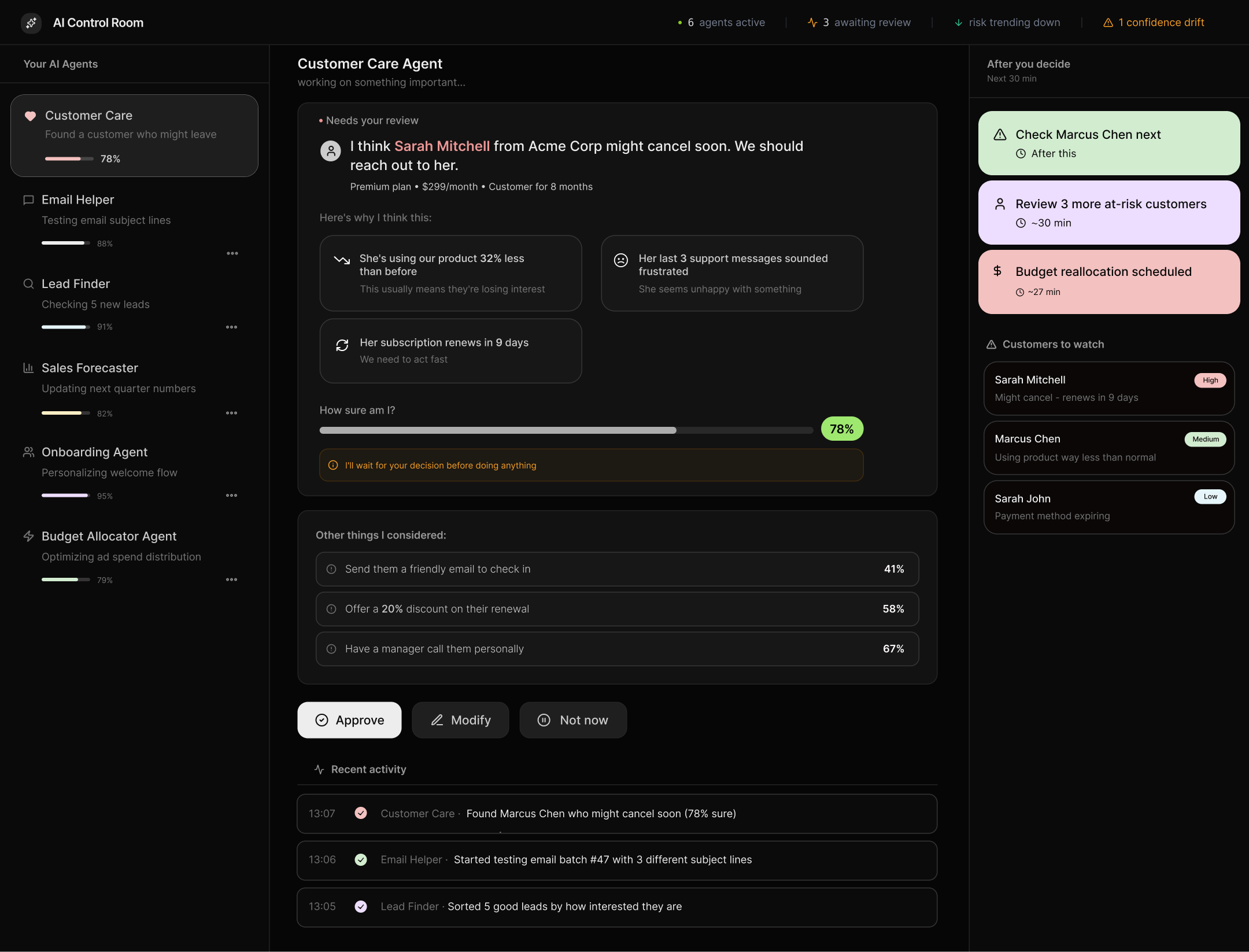
A command center built for clarity in complexity.
A centralized operational view for monitoring multiple AI agents, surfacing real-time states and alerts, and helping operators move from signal to action without losing context.
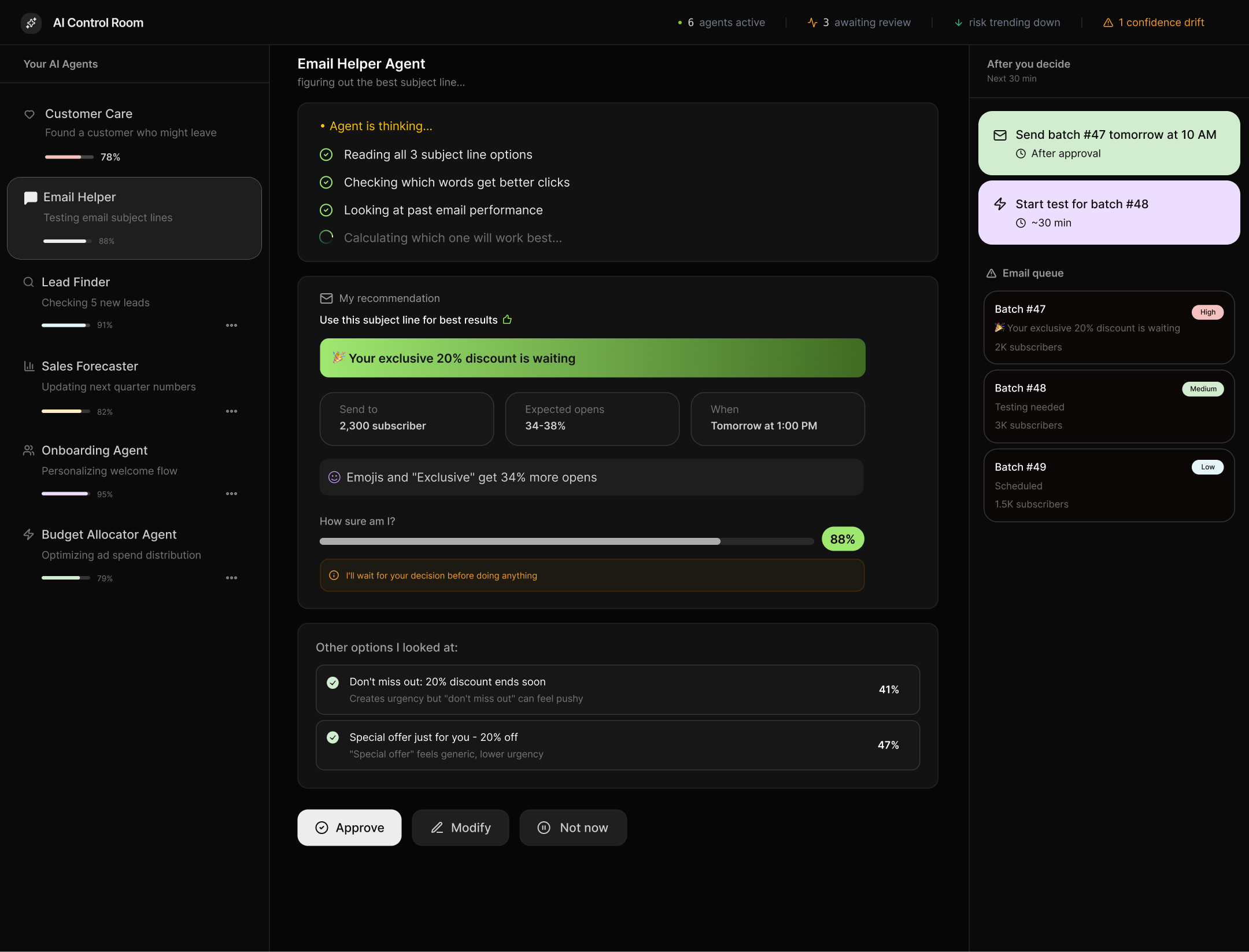
Operational detail
Progressive disclosure helps operators move from the overview into the relevant decision context without losing their place.
Outcome
- Designed patterns for alerts, states and progressive disclosure.
- Built around scanning first, then drilling into detail with context kept intact.
- Concept project, not tested with users.
A command center built for clarity in complexity.
What I learned
The most important part of an operations interface is not showing everything. It is helping the operator quickly understand what matters, when to drill in, and what action to take next.