03 · JobTwine · 2023, 2025 — 2026
AI Hiring Platform
AI-assisted hiring workflows for recruiters and candidates
- AI agents
- B2B SaaS
- Recruiter workflows
- Design system
Overview
Designing AI-powered experiences across the modern hiring journey. JobTwine is an AI-powered recruitment platform designed to streamline hiring from candidate shortlisting to interviews and feedback. I first joined as a UX intern in early 2023, contributing to early user flows and design-system foundations. I returned full-time in 2025 as UI/UX Designer, leading product design across the AI Shortlisting Agent, AI Human Interviewer Copilot, TryUsOut demo experience, and supporting product communication. My focus was turning complex AI capabilities into clear, actionable experiences for recruiters and interviewers.
The problem
Hiring teams deal with large volumes of resumes, interview information, conversations, and feedback. The opportunity was to use AI to reduce repetitive work while keeping humans in control of important hiring decisions. The challenge was making AI assistance useful without making the hiring process more complicated.
My role
- UI/UX Designer.
- I worked across UX/UI design, interaction design, prototyping, reusable components, AI product experiences, and product communication.
- My work included the AI Shortlisting Agent, AI Human Interviewer Copilot, TryUsOut experience, real-time interview insights, candidate analysis and feedback, and supporting sales decks, newsletters, and marketing content.
Context
Designing AI for high-stakes workflows. Hiring involves information-heavy decisions where AI can process information quickly, but recruiters and interviewers still need to understand the signals and make the final decision. My approach was to design AI as an assistant that reduces repetitive work while keeping human judgement at the center. My engagement at JobTwine spanned two phases — a 2023 internship focused on foundational UX and design-system work, and a 2025–2026 full-time role where I led end-to-end product design for the AI hiring experience.
Challenge
Information overload
Hiring teams deal with large volumes of resumes, interview information, conversations, and feedback.
Human decision-making
AI assistance should reduce repetition without removing human judgement from important decisions.
Contextual support
AI needs to appear at the right moments with the right level of detail to be genuinely useful.
Product clarity
AI capabilities must be understandable and actionable across recruiter, interviewer and candidate workflows.
Approach
- 01
Design around the decision, not just the AI.
- 02
Understand — Mapped recruiter and interviewer workflows and identified repetitive, information-heavy tasks.
- 03
Structure — Organized AI-generated information into clear hierarchy, summaries, insights, and actions.
- 04
Assist — Designed contextual AI assistance around the moments where users needed support.
- 05
Validate — Used prototypes and feedback to refine flows, interactions, and visual hierarchy.
Key UX decisions
- Problem
- AI-generated recommendations need useful context, not just a score.
- Decision
- Show the signal, not just the score — Present useful context alongside AI-generated recommendations.
- Why it mattered
- Recruiters need to understand the basis of a recommendation before trusting it.
- Problem
- Interview support is most useful when it is in-context and timely.
- Decision
- Keep AI assistance contextual — Surface help alongside the live interview instead of forcing users between different tools.
- Why it mattered
- Contextual support reduces friction and improves decision-making in the moment.
- Problem
- AI insights are only valuable if they help the user act.
- Decision
- Make AI output actionable — Structure insights, questions, analysis, and feedback around what the user needs to do next.
- Why it mattered
- Actionable output turns AI from a passive system into a practical tool.
- Problem
- Hiring remains a human responsibility even with AI augmentation.
- Decision
- Design for human + AI collaboration — Let AI provide assistance while the human remains responsible for the final judgement.
- Why it mattered
- Trust and accountability are essential in high-stakes hiring decisions.
- Problem
- Static marketing is not enough to explain AI product value.
- Decision
- Let users experience the product — Use TryUsOut to communicate the product through interaction rather than static marketing.
- Why it mattered
- Interactive product discovery makes the value of the system clearer and more memorable.
User flow
- 01
Job requirement
Define role, criteria and priorities
- 02
Candidate shortlisting
Review AI-supported candidate recommendations
- 03
Interview preparation
Prepare questions and context
- 04
Live interview + AI Copilot
Support the interview in context
- 05
Analysis & feedback
Review signals, insights and notes
- 06
Hiring decision
Make the final call with human judgement
Design system
Building reusable patterns across AI workflows. I worked with reusable UI patterns across cards, tables, controls, candidate information, AI recommendations, conversations, feedback, states, navigation, and extension UI.
- Components
- Cards, tables, controls, candidate information, AI recommendation states.
- Patterns
- Review flows, interview support, contextual AI prompts, feedback loops.
- System foundations
- Navigation, states, conversational UI, extension surfaces, reusable product language.
Final experience
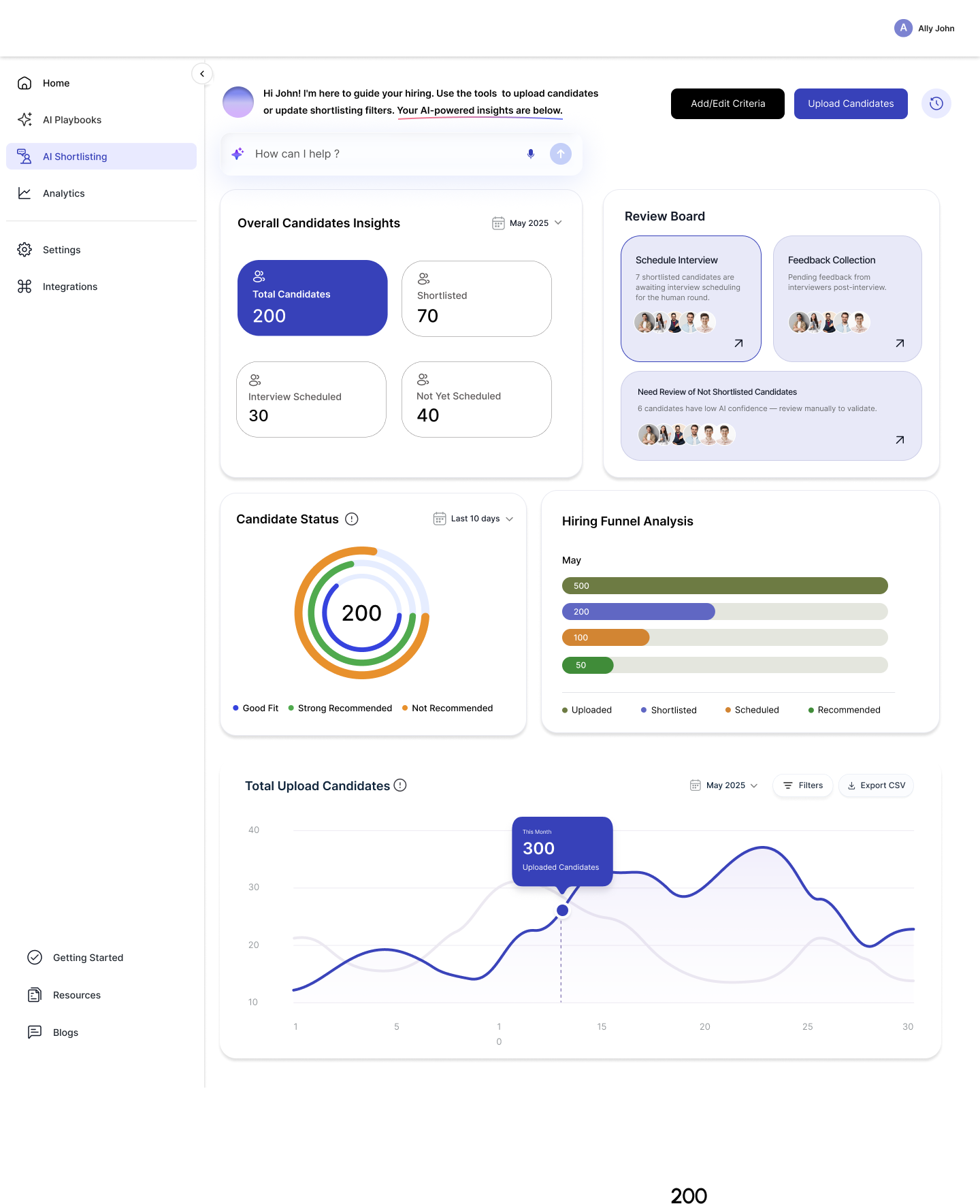
Recruiter dashboard
Organized around pending actions and pipeline state so the first screen answers what needs attention today.
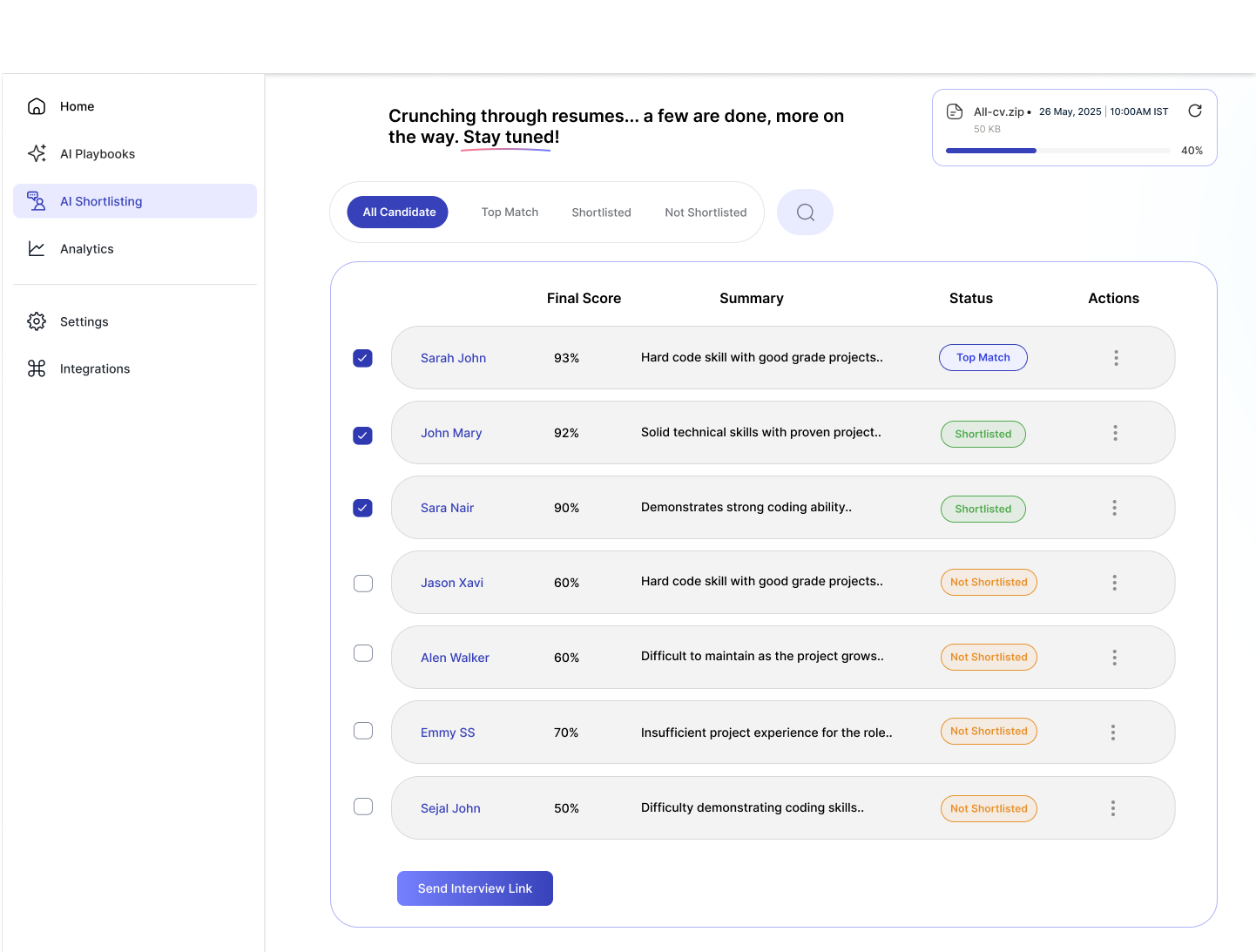
AI shortlisting agent
The ranking is presented with its criteria visible and adjustable, keeping the recruiter in the decision.
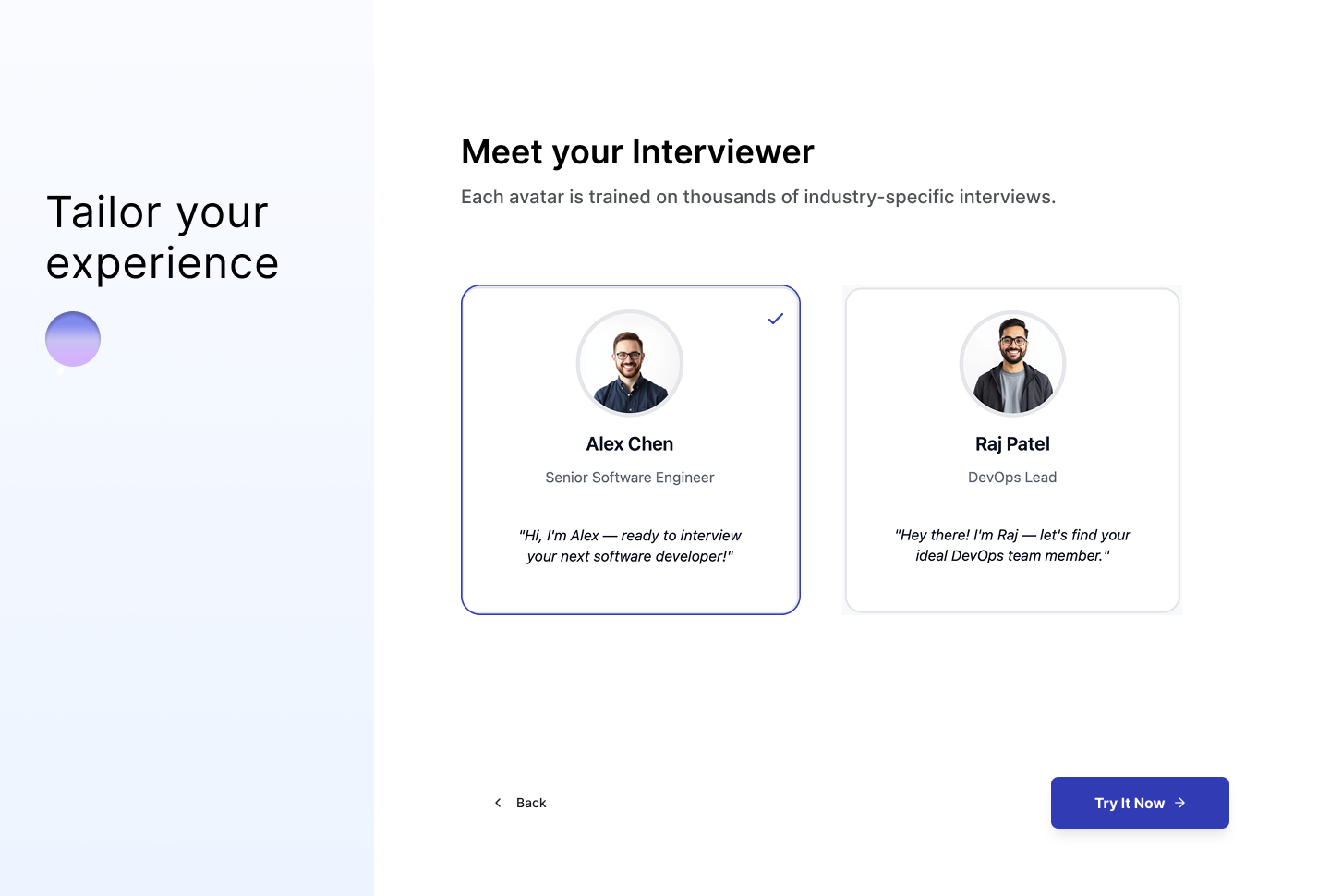
Meet your interviewer
Choose an interviewer that best matches the role and interview context, giving candidates a more relevant and personalized interview experience.
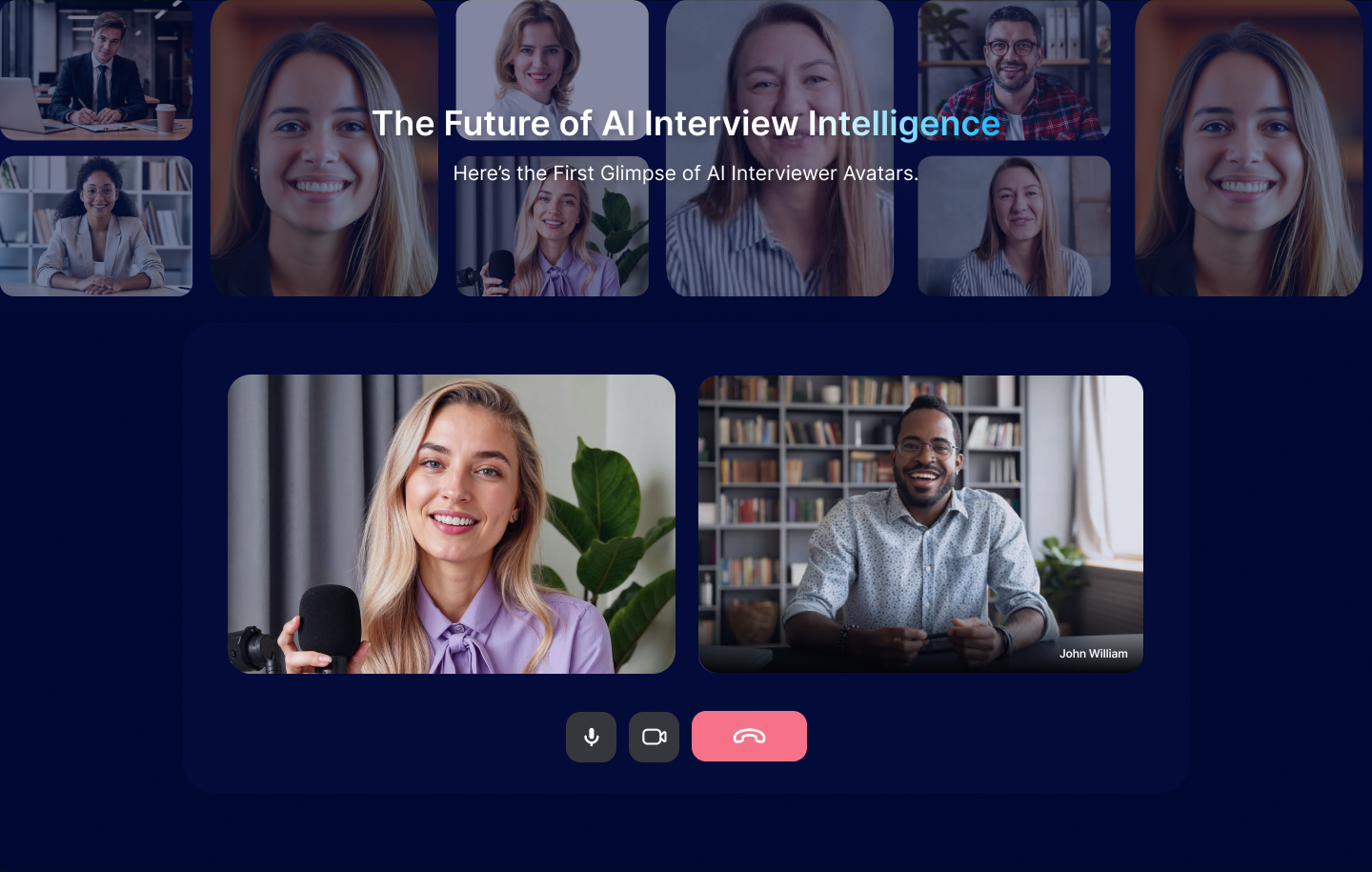
AI interview experience
Structure, duration and progress are explicit throughout, which is what makes an automated interview feel fair.
Outcome
- 20% increase in qualified leads from the AI copilot and self-demo flows.
- 3× increase in engagement from marketing creatives and LinkedIn campaigns.
- 30+ reusable UI components in an accessible design system used across hiring workflows.
The best AI experience does not try to make every decision for the user. Designing JobTwine reinforced that AI becomes more valuable when it is contextual, explainable, and actionable, while the human remains in control.
What I learned
The best AI experience doesn't try to make every decision for the user. Designing JobTwine reinforced that AI becomes more valuable when it is contextual, explainable, and actionable, while the human remains in control.