01 · Lyzr AI · 2026
Shopping Copilot
E-commerce experience with an AI-powered conversational shopping agent
- Conversational AI
- E-commerce
- Human–AI interaction
- Product UX
Overview
I designed Zenni, an AI-powered conversational shopping agent integrated into the Zenni storefront. Zenni helps users discover products, make product decisions, configure their purchase, complete checkout, and track their order through one connected experience.
The problem
Shopping for eyewear can involve multiple decisions around style, fit, prescription, lens options and price. Traditional e-commerce makes users navigate catalogs, filters and separate product flows to complete these decisions.
My role
- Designed the conversational shopping experience end-to-end, including the AI interaction model, conversation patterns, product recommendations, decision-making flows, shopping actions and the transition between conversation and the existing Zenni experience.
Context
Zenni was designed as an AI layer within the existing Zenni e-commerce experience rather than as a separate shopping destination. The goal was to make complex shopping decisions easier while keeping the familiar website experience available.
Challenge
Conversation vs. shopping
Chat is useful for understanding intent, but shopping still requires visual comparison and structured decisions.
Trust in recommendations
AI recommendations need to feel relevant and understandable rather than arbitrary.
Complex decisions
Eyewear involves multiple product and lens decisions that should not feel overwhelming.
User control
The agent should guide users while keeping important decisions and actions in the user's control.
Approach
- 01
Mapped the existing shopping journey and identified where conversational guidance could reduce friction.
- 02
Designed Zenni as a shopping interface, combining conversation with product cards, recommendations, quick actions and structured UI.
- 03
Used contextual questions and guided choices to help users move through complex decisions.
- 04
Extended the agent beyond discovery into configuration, checkout and post-purchase tracking.
Key UX decisions
- Problem
- Text-only replies cannot show product comparison, which is essential for choosing eyewear.
- Decision
- Rendered product recommendations as visual cards inside the conversation.
- Why it mattered
- This maintains conversational speed while restoring visual comparison shoppers need.
- Problem
- Recommendations without explanation feel arbitrary and reduce trust in the agent.
- Decision
- Paired each recommendation with a plain-language rationale tied to what the user said.
- Why it mattered
- Users can immediately judge if the agent understood them and correct it if needed.
- Problem
- Pure conversation cannot handle complex configuration tasks like prescription and lens selection.
- Decision
- Integrated structured UI components for configuration decisions within the conversational flow.
- Why it mattered
- Important purchasing decisions require clarity that conversation alone cannot provide.
- Problem
- Context gets lost as users move between conversation and shopping workflows.
- Decision
- Maintained user context across the entire journey from discovery through post-purchase tracking.
- Why it mattered
- Continuity keeps users engaged and reduces friction in complex shopping tasks.
- Problem
- The agent will sometimes misunderstand or make incorrect recommendations.
- Decision
- Designed explicit repair patterns as visible controls so users can refine, narrow, or restart.
- Why it mattered
- One-tap recovery keeps failure from ending the session and maintains trust.
User flow
- 01
User intent
Described in natural language
- 02
AI understands request
Clarifies one variable at a time
- 03
Product discovery
Catalog results rendered in-thread
- 04
Recommendation
Shortlist with plain-language reasoning
- 05
Product selection
Choose and configure the product
- 06
Configuration
Lens options and customization
- 07
Prescription
Prescription entry if needed
- 08
Checkout
Complete the purchase
- 09
Payment
Process payment
- 10
Order confirmation
Confirm the order
- 11
Order tracking
Track the shipment
Zenni guides users through the entire shopping journey from discovery to post-purchase support.
Design system
Reusable conversational patterns form the foundation of Zenni's interactions.
- Agent and user messages
- Clear distinction between agent and user communication.
- Clarifying questions
- Contextual questions to guide decision-making.
- Product cards
- Visual product representations within conversation.
- Comparison patterns
- Side-by-side product comparison in-thread.
- Quick actions
- Contextual shopping actions available in messages.
- Configuration components
- Tools for customizing purchase options.
- Error and recovery states
- Clear guidance when understanding fails.
- Shopping actions
- Add to cart, purchase, and tracking actions.
Final experience
Conversational entry inside the storefront
The launcher sits within the existing site rather than over it, so the AI reads as an assistant to shopping — not a separate destination.
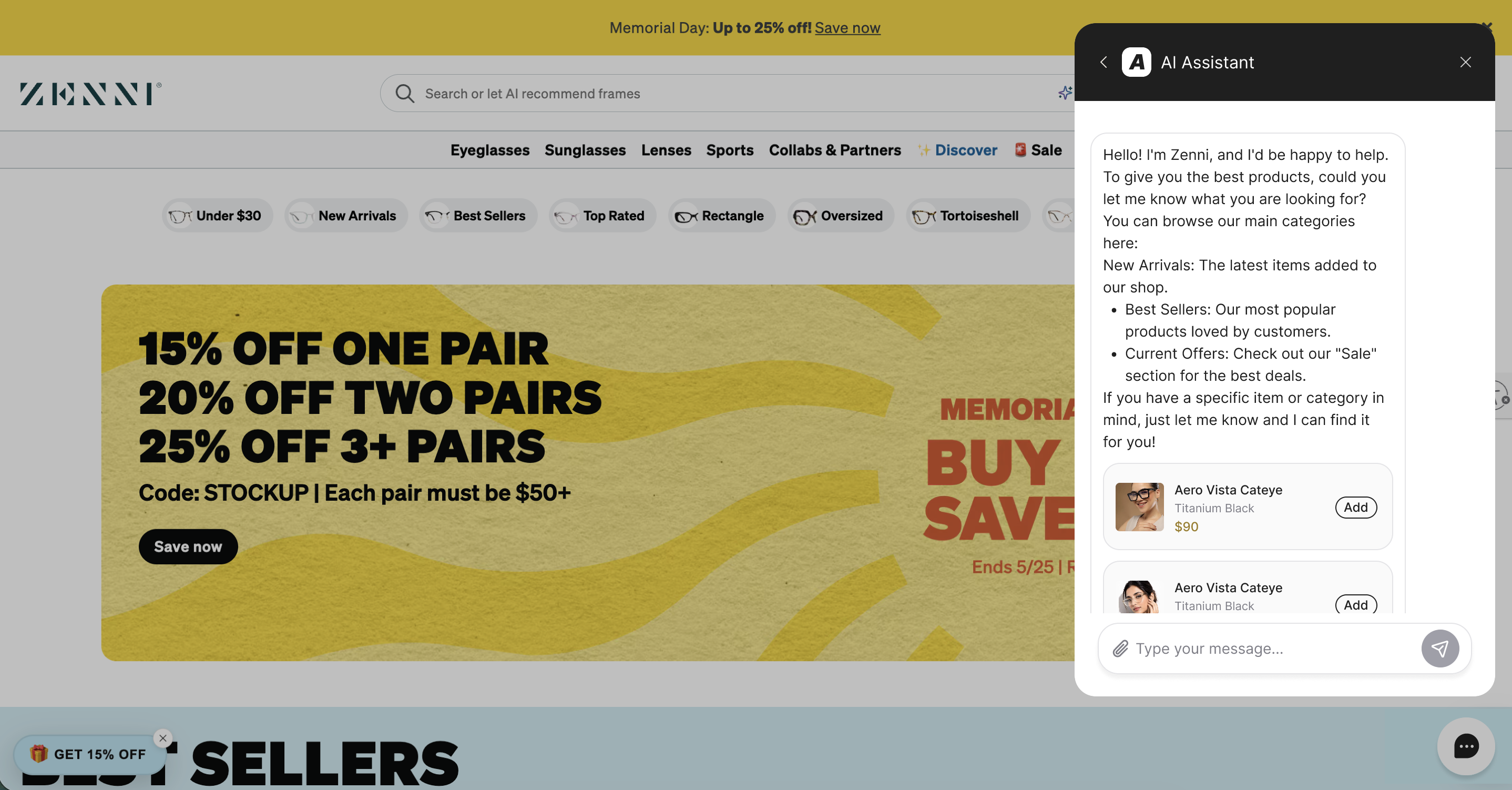
Intent to shortlist
A vague request becomes a small, reasoned shortlist instead of a filtered result page with hundreds of items.
Comparison inside the conversation
Frames are shown side by side in-thread so the decision does not require leaving the conversation.
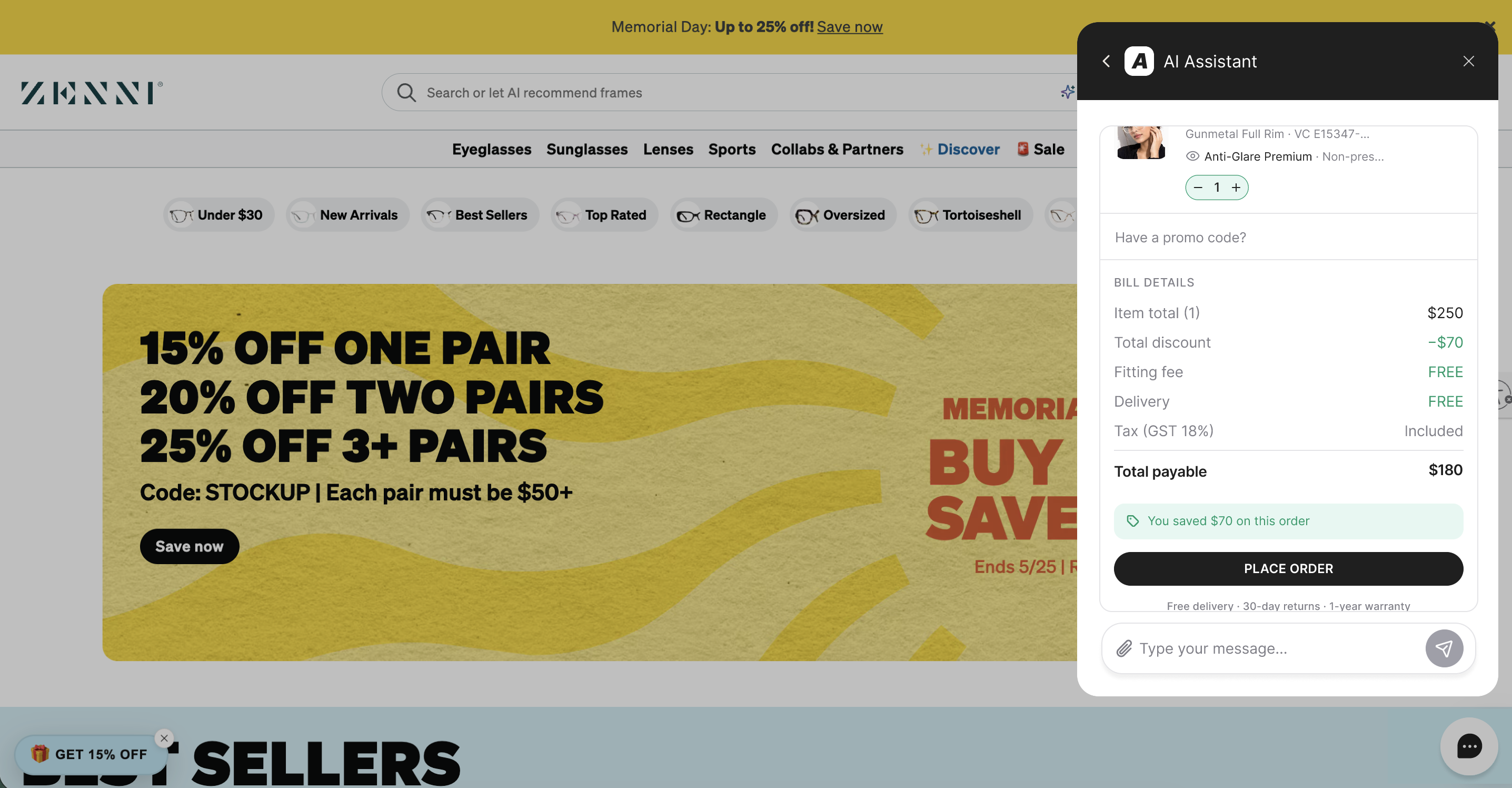
Hand-off to the product experience
Every recommendation routes into the existing product page, keeping the conversation as a layer over the real catalog.
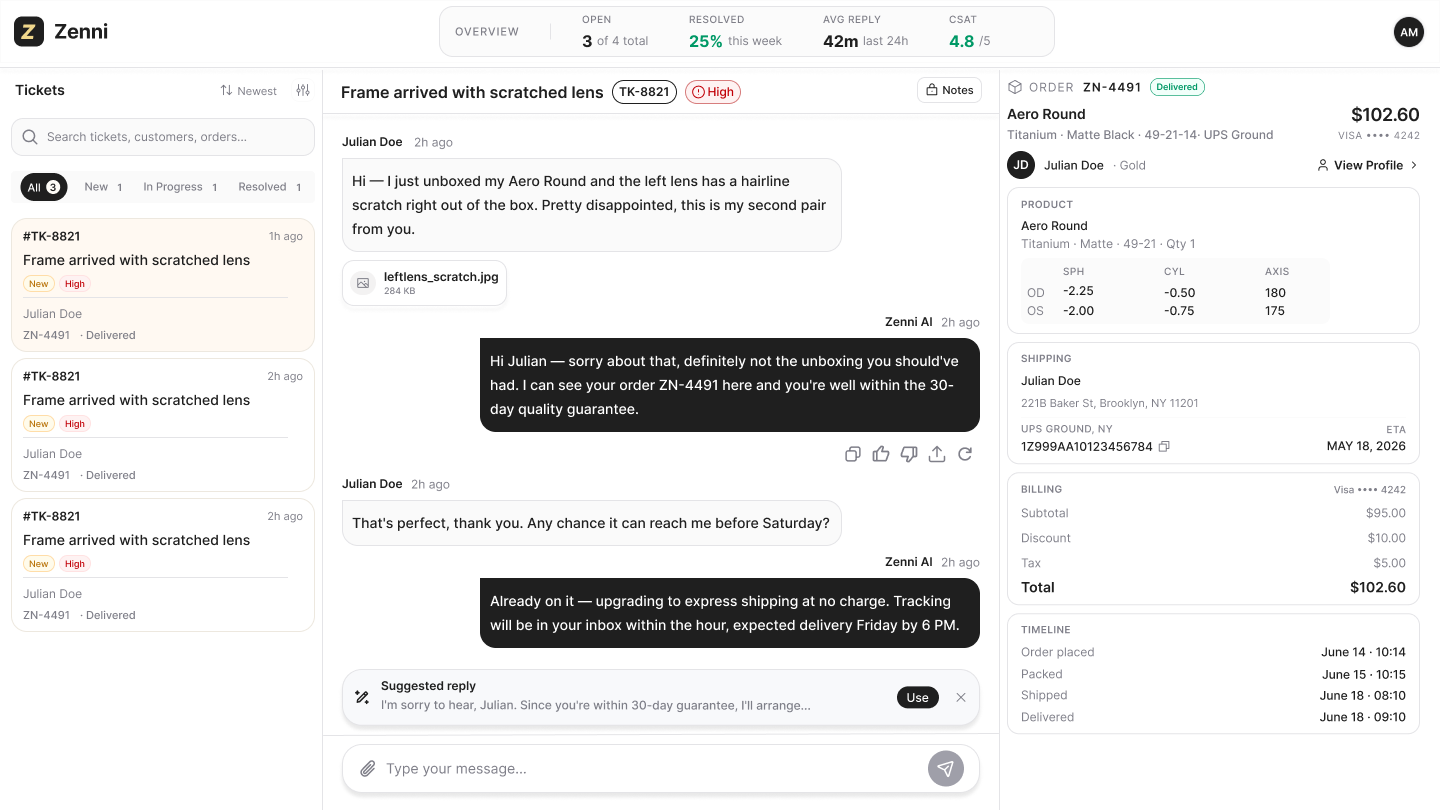
AI-powered support & operations
A centralized workspace for managing customer conversations, user and order details, tickets, and support workflows in one place. AI-assisted chat helps support teams understand context faster and respond more efficiently.
Outcome
- Designed the full shopping journey inside the existing storefront, from discovery to order tracking.
- Recommendations come with plain-language reasons, product comparison happens in the conversation, and one-tap recovery handles misread requests.
- Results were not measured during this project.
The strongest conversational commerce experience is not about making everything chat-based. Conversation works best for understanding intent and providing guidance, while structured UI works better for comparison, configuration and completing important actions.
What I learned
Conversational commerce works best as an additional path, not a replacement one. The hardest design work was not the chat UI — it was deciding which parts of a shopping journey genuinely improve in conversation and which are better left to traditional UI.